ROSA (Responsive Observation Security Agent), an Edge AI security camera unit from RAD, detects and deters on site. Two PTZ cameras cover 180°, NVIDIA Jetson runs AI analytics on the device, and a 110 dB speaker and LED display warn intruders on the spot. SARA Agentic AI verifies each event and escalates by your SOP.
ROSA puts two PTZ cameras, a 110 dB two-way speaker, a curved LED display, deterrence lights, NVIDIA Jetson Edge AI, and 5G connectivity into one 22.9 lb unit. Detection and deterrence happen in the same unit, with no separate server or recorder on site.
ROSA runs RAD AI analytics on the device. In RADSOC you edit LED messages, audio scripts, zones, and schedules for one ROSA or a whole fleet, and push changes without a site visit.
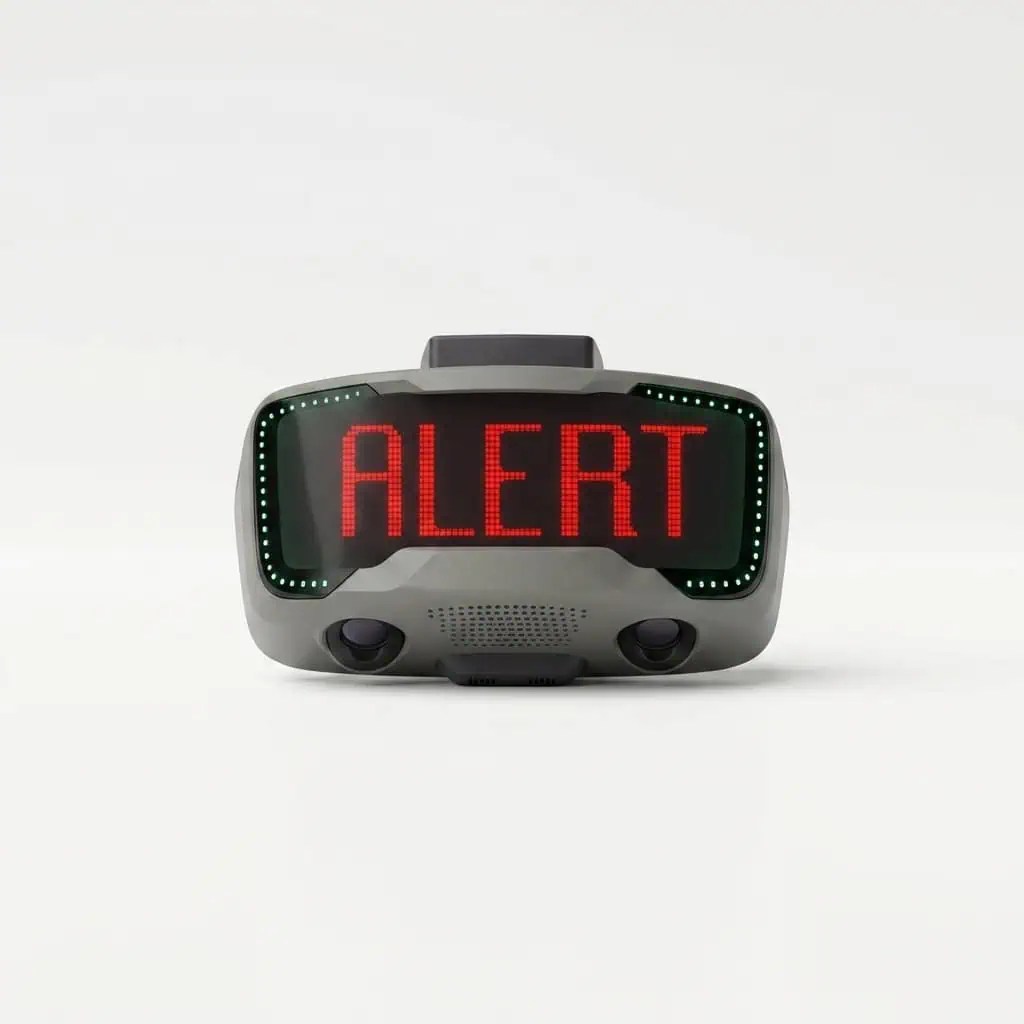
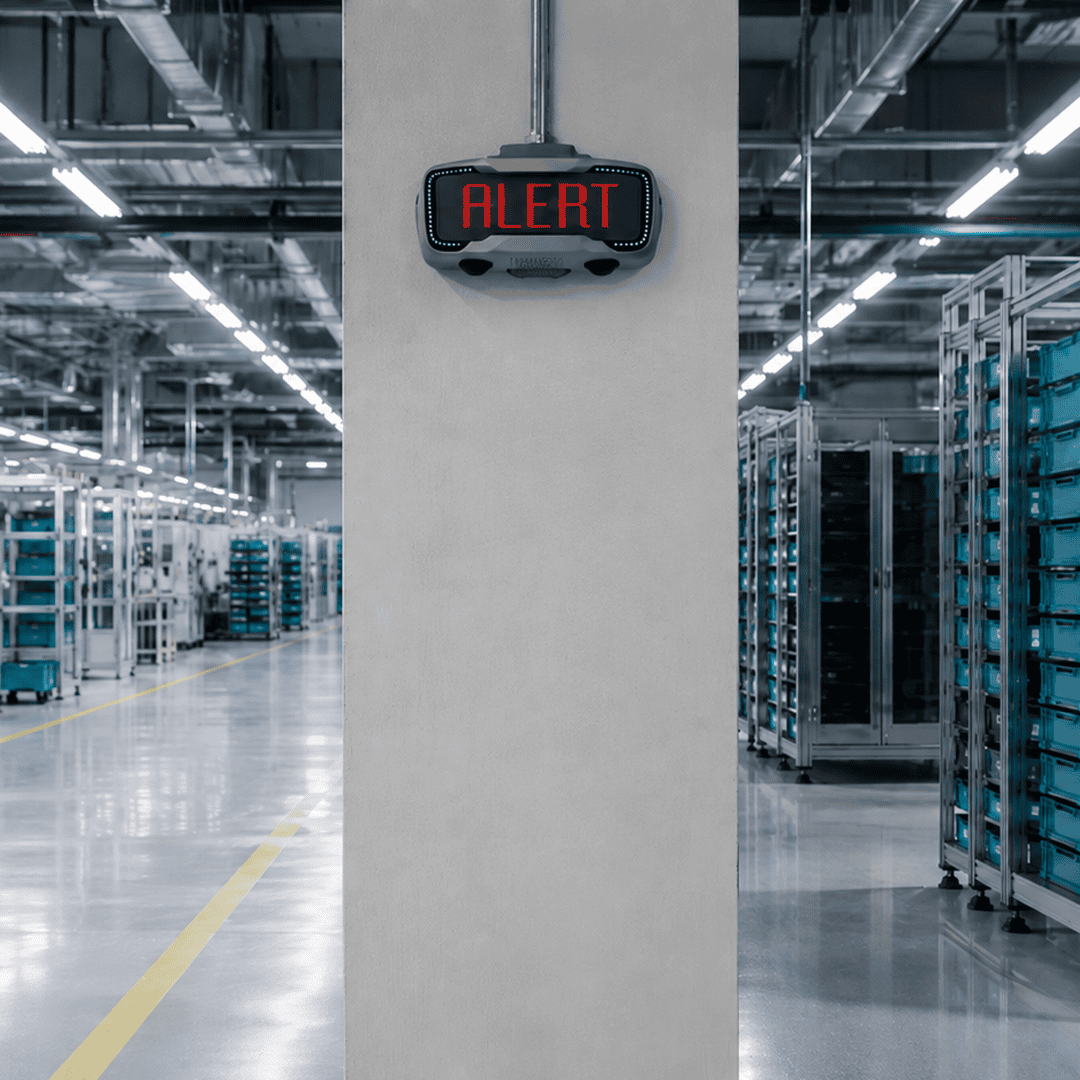
A dual-panel curved LED display shows warnings, welcome notes, or your logo.
Two PTZ cameras cover 180° with night vision, so one unit watches a wide area.
A 100 W, 110 dB speaker and dual mics handle talk-downs and two-way calls.
NVIDIA Jetson Orin NX runs detection on the device, so ROSA acts in seconds.
5G cellular links ROSA to RADSOC and SARA, with optional Wi-Fi or Ethernet.
RGB ribbon lights flash and change color the moment ROSA detects a breach.
ROSA is one model: a 180° Edge AI security camera with two PTZ cameras, an NVIDIA Jetson Orin NX processor, a 110 dB speaker, and a curved LED display. ROSA weighs 22.9 lb, runs on 100-240 V mains power with a 60-minute battery backup, and connects over 5G.
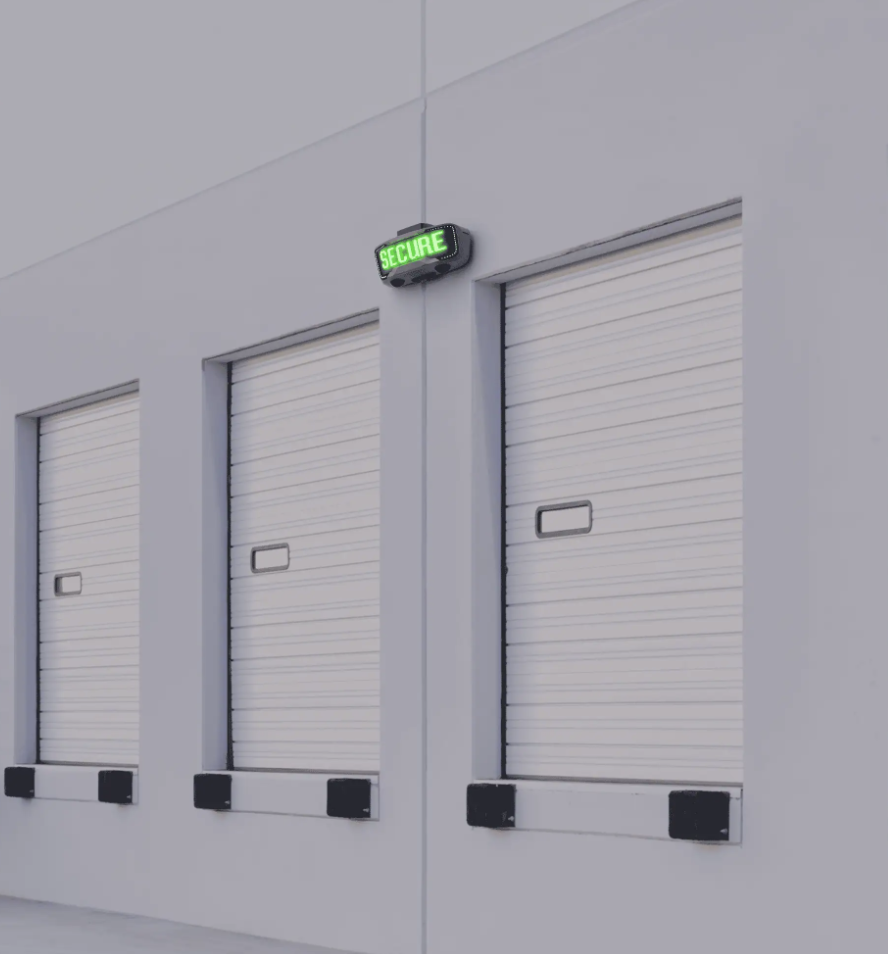
180° Edge AI security camera for wall or pole mounting; RAD's talk-down camera
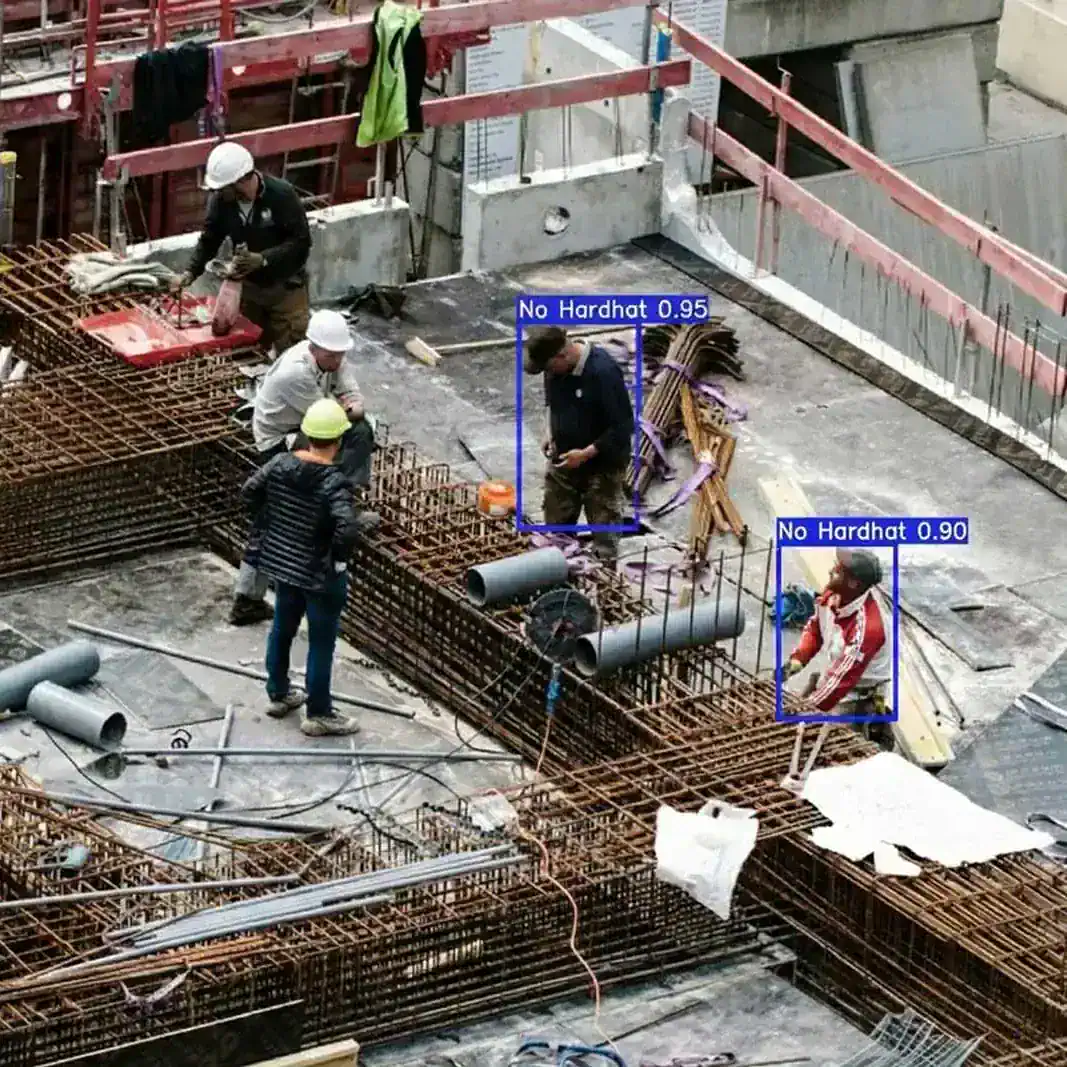
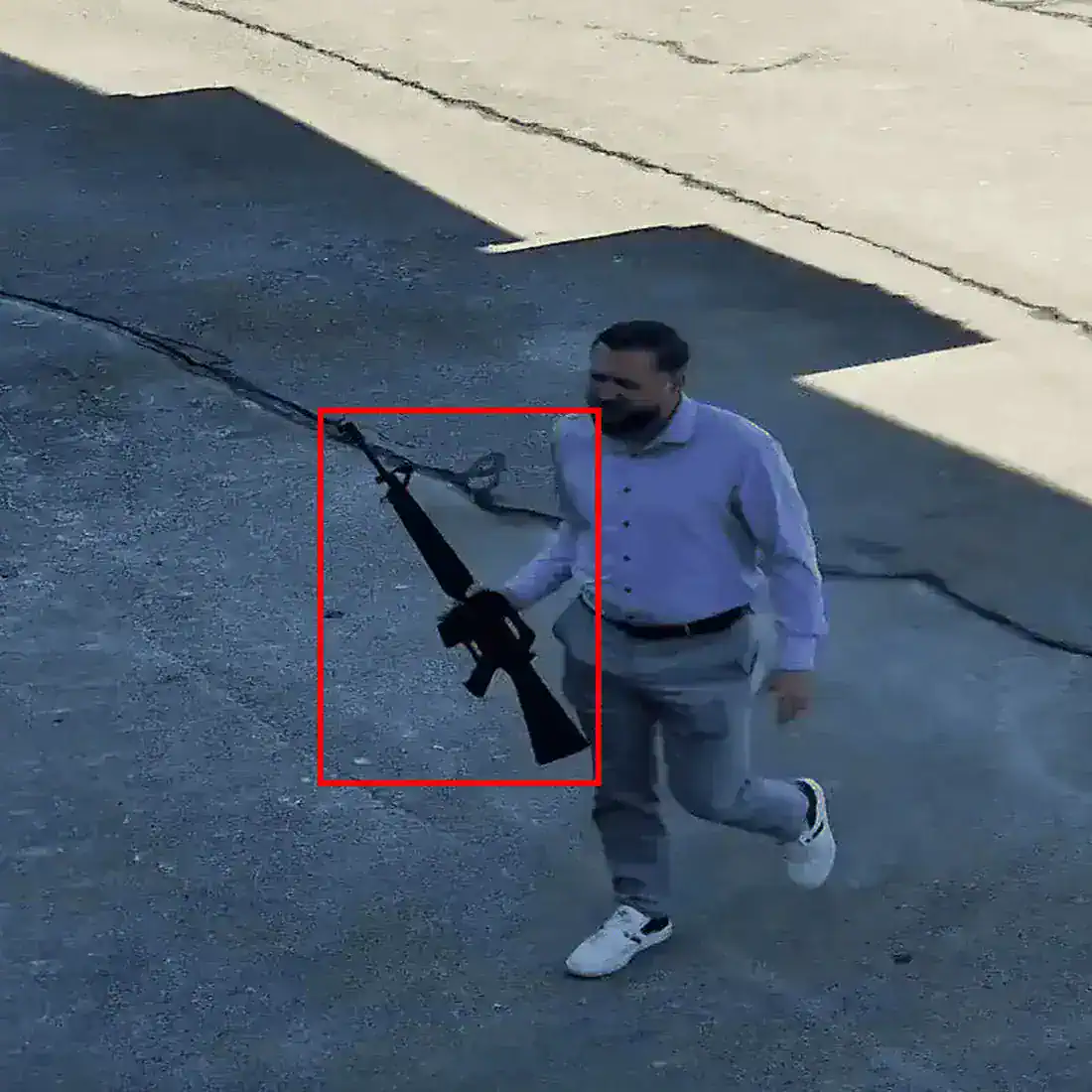
ROSA detects people, vehicles, loitering, boundary intrusion, missing PPE, and visible firearms, and ROSA reads license plates when the camera view captures them. ROSA runs these AI analytics on the device with NVIDIA Jetson, so detection doesn't wait on a server or a cloud round trip.
ROSA applies RAD AI analytics to the zones and rules you define, so alerts reflect your site and your hours. ROSA also supports vehicle tailgating detection at gates.
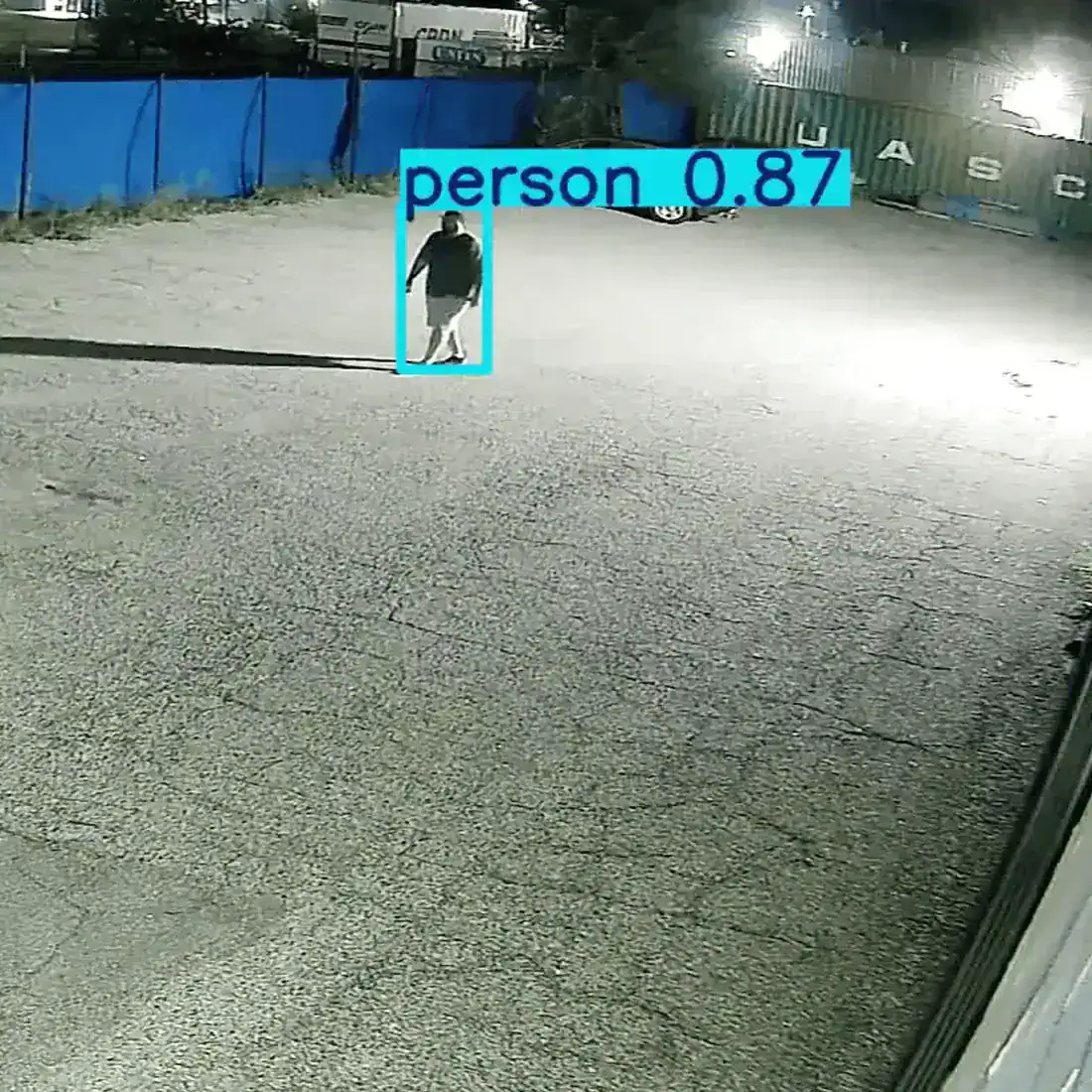
ROSA flags anyone who crosses a fence line, gate, or zone boundary after hours.
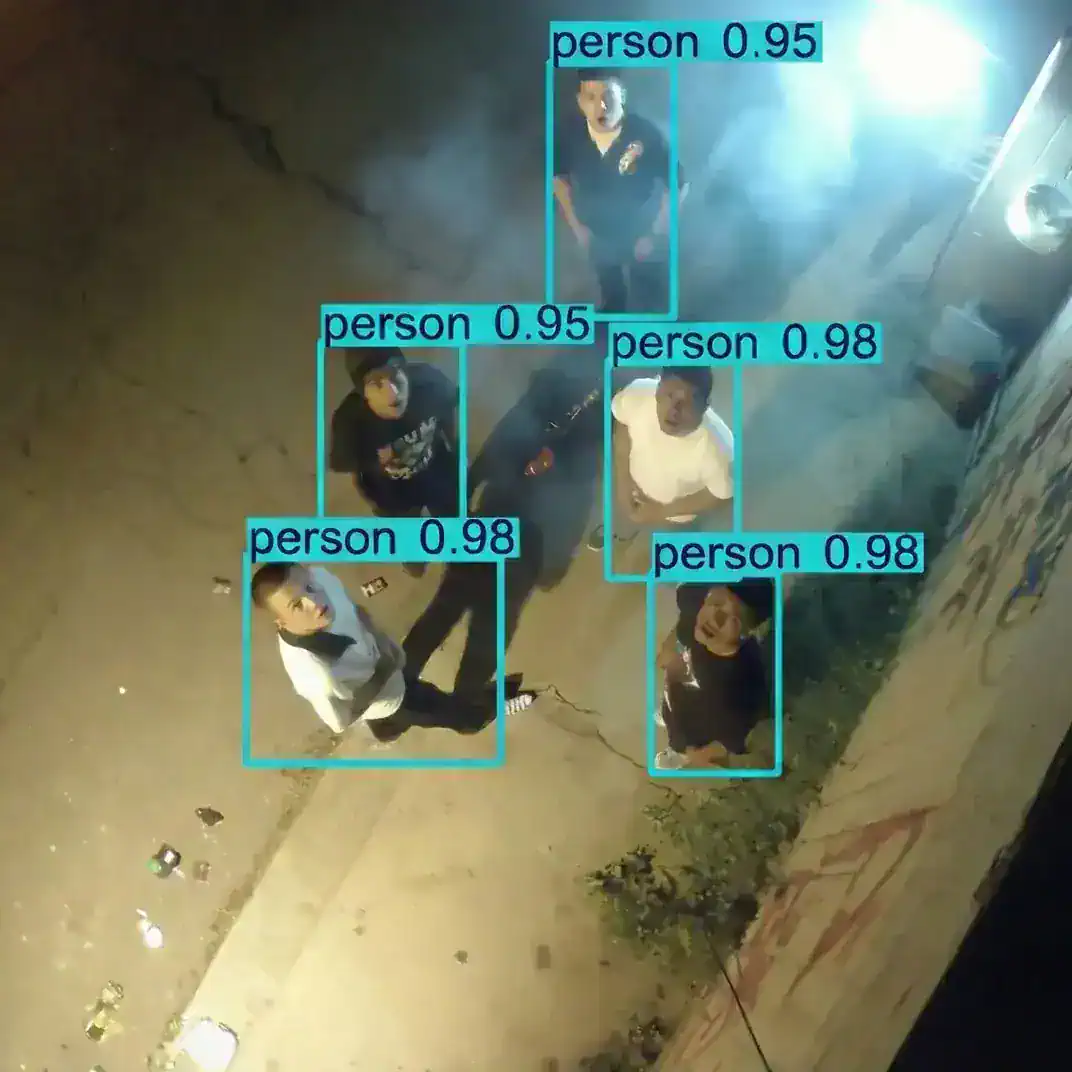
ROSA flags anyone who lingers near a gate, container, or equipment too long.
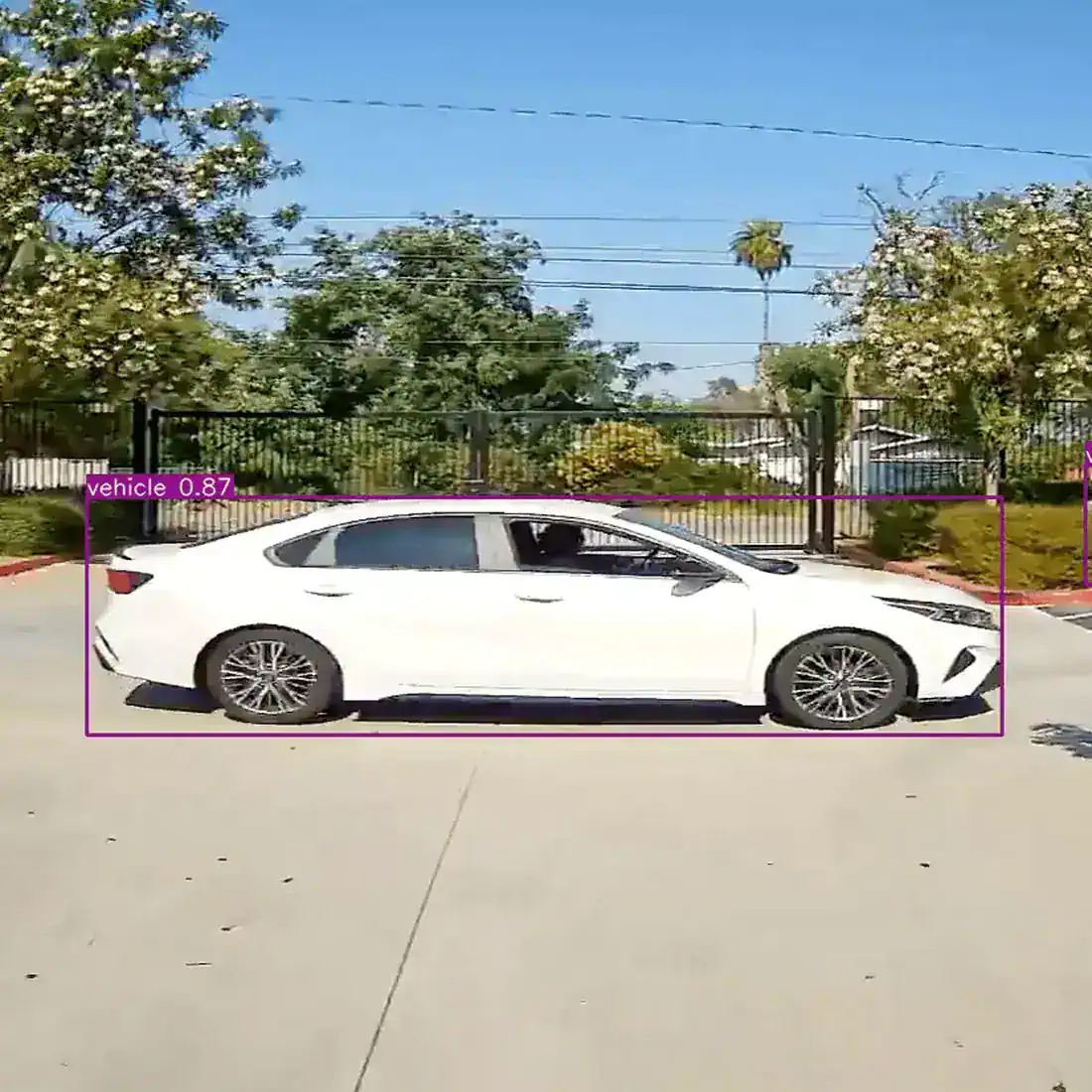
ROSA tracks vehicles that enter, idle too long, or park where they shouldn't.
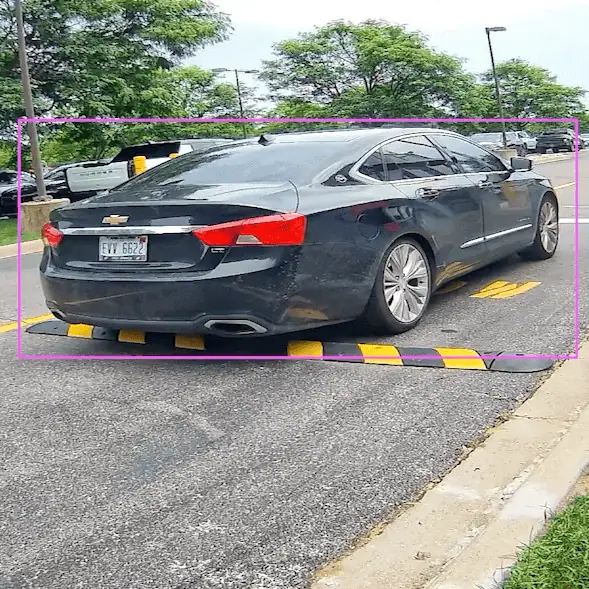
ROSA reads license plates when the camera angle and mounting placement allow.
SARA Agentic AI takes every ROSA detection from alert to resolution: SARA verifies the event, deters through ROSA's speaker and display, escalates by your SOP, keeps responders updated, and documents the outcome. SARA (Speaking Autonomous Responsive Agent) is RAD's agentic AI operator layer for autonomous incident response.
You set the zones, schedules, and escalation rules. ROSA handles detection and on-site deterrence at the edge from its spot on a wall or pole, and SARA handles the manual alarm-handling steps that usually fall on a monitoring operator.
01
ROSA, mounted over a loading dock, spots a person at the doors after hours and sends the clip and zone details to SARA.
02
SARA checks the clip against your rules and helps filter out wildlife, shadows, and other false alarms before anything escalates.
03
ROSA flashes a warning on its LED display and SARA issues a live voice-down through ROSA's 110 dB speaker.
04
When the person stays, SARA alerts your contacts and responders in parallel, following your SOP.
05
Responders get live scene updates, the subject's location, and the exact entrance or lot ROSA covers on the way in.
06
SARA closes the event with a time-stamped report that includes video, actions taken, and escalation records.
Then it runs again. Every detection, every time.
ROSA runs on 100-240 V mains power, draws about 60 W in normal use, and carries a battery that keeps it running for about 60 minutes if power drops. ROSA connects over 5G cellular, with optional Wi-Fi or Ethernet, so it doesn't need to join your network.
Plan a 100-240 V AC circuit at each mounting point. ROSA draws 60 W typical and 140 W at peak. The built-in battery covers about 60 minutes, so a short power cut doesn't take ROSA offline.
Detection and on-site deterrence with the LED display, lights, and audio run on ROSA itself, so both continue without a cellular connection. SARA escalation, outside notifications, and remote viewing in RADSOC resume once ROSA reconnects. Optional Wi-Fi or Ethernet can serve as a backup link where the site has it.
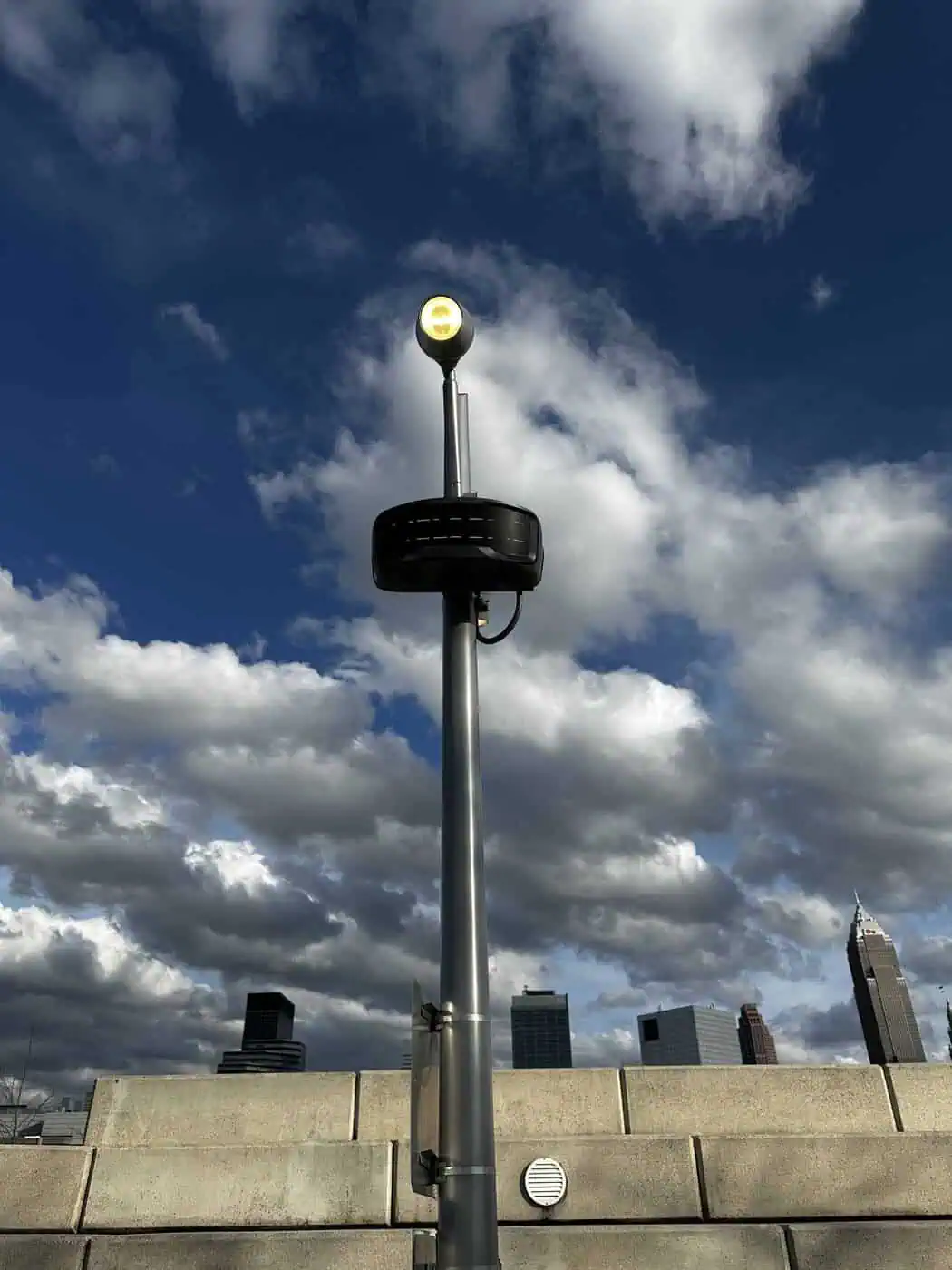
ROSA also rides on RIO, RAD's solar-powered security trailer, which raises ROSA units on a mast and runs without site power.
RADSOC shows power status, battery, connectivity, and device health for every ROSA, and ROSA's self-healing runs automated diagnostics and system tuning to keep it online.
ROSA is available by subscription or outright purchase, and RAD quotes each deployment based on unit count and site. The ROSA subscription bundles the operating stack into one monthly price, and installation is billed separately.
Plan: Tell us about the site and the areas you need covered. RAD recommends a unit count, mounting points, and current lead time.
Prepare: Your installer runs 100-240 V power to each wall or pole mounting point.
Install: ROSA is mounted and aimed, powers on, and connects over 5G with no IT work on your side.
Go live: Your zones, schedules, LED messages, audio scripts, and escalation rules are loaded, and SARA Agentic AI starts handling events.
SARA Agentic AI monitors every ROSA event as part of the subscription, verifying alarms and escalating by your SOP. Your team reviews video, events, and reports in RADSOC on the web or a phone. ROSA also works with Immix, so a monitoring center already on Immix can receive ROSA events.
Common questions
ROSA pricing is quote-based and depends on the number of units, subscription or purchase, and the site. The ROSA subscription bundles 5G connectivity, AI analytics, SARA Agentic AI monitoring, cloud storage, RADSOC, maintenance, and support into one monthly price. Installation is billed separately. Request a demo and RAD will send a recommended layout, unit count, and quote for your site.
ROSA needs 100-240 V mains power at the mounting point and draws about 60 W in normal use. A built-in battery keeps ROSA running for about 60 minutes if power drops. ROSA doesn't need Wi-Fi: it connects over 5G cellular, and Wi-Fi or Ethernet is optional where your site has it.
ROSA can speak three ways. It plays your pre-approved audio scripts automatically when a rule is met, SARA Agentic AI can issue a live voice-down through ROSA's 110 dB speaker, and an operator can step in through ROSA's two-way audio from RADSOC. You choose the scripts and escalation rules, so every talk-down follows your SOP.
ROSA runs AI analytics on the device, so detection and on-site deterrence with the LED display, lights, and talk-down audio keep working during a cellular outage. SARA Agentic AI escalation, outside notifications, and RADSOC cloud access need a connection and resume once ROSA reconnects. Optional Wi-Fi or Ethernet can serve as a backup link.
RAD has announced ROSA orders and deployments at retailers, construction companies, universities and colleges, banks, auto centers and manufacturers, energy and logistics companies, and city parks. RAD reports building more than 1,000 ROSA units across ROSA generations.
Recent announcements include a 56-unit ROSA expansion order from a big-box retailer, a 16-unit ROSA order for a multi-site construction deployment, and 10 ROSA units deployed at an East Coast university. Sites without power run ROSA on RIO.
.png)




Yes. ROSA is sold and installed through RAD's authorized partners, who are trained on ROSA, SARA Agentic AI, and RADSOC and can fold ROSA into the security program they already run for you. Connect with us and we'll point you to an authorized partner in your area.