

How AI Detects
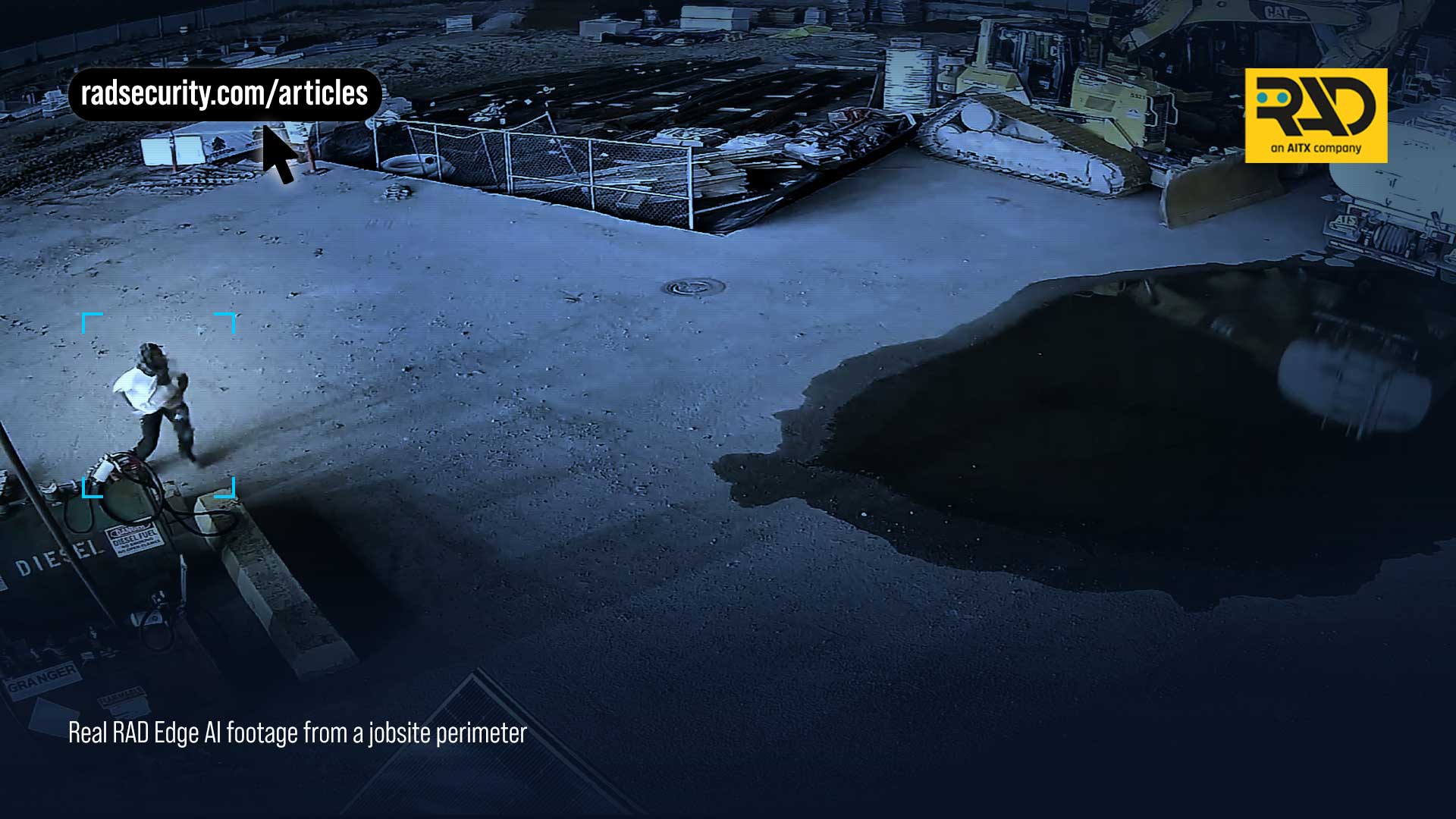
AI perimeter intrusion detection identifies a fence breach or unauthorized entry by classifying what's crossing the line. Edge AI separates a person or vehicle from wind, wildlife, and shifting light before the event reaches an operator queue.
Detection is the part the industry has largely solved. What determines whether a breach becomes an incident is the verification step, ensuring that escalation is for real events.
"More sensors on a fence means more detection. It doesn't mean more response. Those are separate problems. The industry has been solving detection. We're solving response."
Steve Reinharz, Founder and CEO, Robotic Assistance Devices
False Alarm Fatigue
Nuisance alarm rate can quickly make or break a system. Run forty unqualified alerts a night through a monitoring center and operators quickly ask that the sensitivity be dialed back. The system stays online but the value of the system disappears.
The Fence Line
Camera placement still determines what perimeter analytics can detect. A model can't classify activity outside the field of view or recover detail the camera never captured. Coverage, viewing angle, lighting, and image quality must all be addressed before intelligence can add value.
AI Analytics adds intelligence to compatible third-party cameras with ONVIF Profile S support, avoiding replacement. Compatible cameras can detect whether the object crossing a detection zone is a person, a vehicle, or an animal, and can recognize activity such as perimeter intrusion or loitering. That gives the operator valuable information instead of another motion alert.
Edge AI takes that a step further by putting the analytics and response on the device. With NVIDIA processing onboard, the unit makes the classification at the perimeter and can act on it immediately. If a person enters a restricted area, integrated audio and visual deterrence can activate in real time.
Zone Rules and Behavior
Detection zones do more than draw a line. A crossing event on the outer boundary carries different weight than a dwell event holding the same spot for ninety seconds. A vehicle that stops on an access road and stays is a different problem than one that passes through.
After Detection
Most sites run the response in sequence. An operator opens the clip and makes a judgment, pulls a second camera to confirm, calls the guard post or the on-call manager or the monitoring center, initiates a talk-down if the site has that capability, decides whether the event justifies dispatch, then documents it.
Each handoff costs a minute or two of real time. Six handoffs is a fence breach with a ten-minute head start, and the subject isn't waiting for step four. The gap widens with scale. One facility with a well-tuned perimeter is manageable. Forty facilities routed to a single monitoring center overnight, with one operator carrying the shift, is a queue.
Verification Determines Response
Many jurisdictions now prioritize dispatch on verified events and bill for false ones. A perimeter that produces classification, a live clip, and a documented deterrence attempt earns a different response than one that produces a nebulous alert. Verification is an essential step to convert an alert into a dispatch priority.
What Autonomous Perimeter Security Covers
ROSA (Responsive Observation Security Agent) is an Edge AI security unit that detects, deters, and documents at fixed and semi-permanent sites. ROSA covers building perimeters, like roll-up doors, corners, and blind spots, detecting activity and delivering strong audio and visual deterrence at the point of the event.
RIO (ROSA Independent Observatory) is an Edge AI unit for rapid-deploy perimeter coverage. RIO suits construction sites, lay-down yards, and expansion areas where the fence went up before the infrastructure did. Deterrence delivered on site removes the delay created when video or a basic alarm waits in a remote guarding queue before anyone can issue a challenge.
ROAMEO is a Physical AI security robot for autonomous patrol in outdoor environments. On a large perimeter, ROAMEO carries detection along a route instead of observing from one point, covering ground between fixed positions where cameras can't reach.
AVA (Autonomous Verified Access) combines credential validation, gate control, and Edge AI vision in one unit. It validates the credential presented, then watches the gate cycle to ensure that one authorization results in one permitted entry. If another vehicle or pedestrian attempts to follow through, AVA detects the unauthorized entry and can initiate the appropriate response through SARA Agentic AI. This gives sites continuous gate coverage without a staffed post.
SARA (Speaking Autonomous Responsive Agent) is RAD's agentic AI operator layer for security incident response orchestration, carrying an event from detection to resolution. When a perimeter event fires, SARA verifies the activity against the other cameras and sensors covering that zone, applies the site's escalation path, initiates human-like voice-downs, notifies stakeholders in parallel, and documents the incident while the event is still open.
Evaluating Perimeter Coverage
Walk your own perimeter timeline before comparing systems. Start at detection, continue to resolution, and mark every point where someone has to click, call, or approve.
Measure:
- Time from detection to verified classification
- Time from verification to the first deterrence attempt
- Number of manual handoffs between the alert and dispatch
- Ratio of verified incidents to total alerts per night
- Zones left unobserved between patrol or camera positions
- Incidents closed without a physical dispatch
Those manual points reveal three things: response delay, operator cost, and the ceiling on how many sites one team can carry.
Bottom Line
Perimeters fail in the minutes between the alert and the response, and that interval is what autonomous perimeter security is built to close.
Start where alerts outnumber incidents by the widest margin. Map what happens after each alert, and the repeatable portion becomes the scope for a pilot.
Last updated: August 2026
See how RAD applies AI detection and autonomous response across a perimeter. Request a demo.