
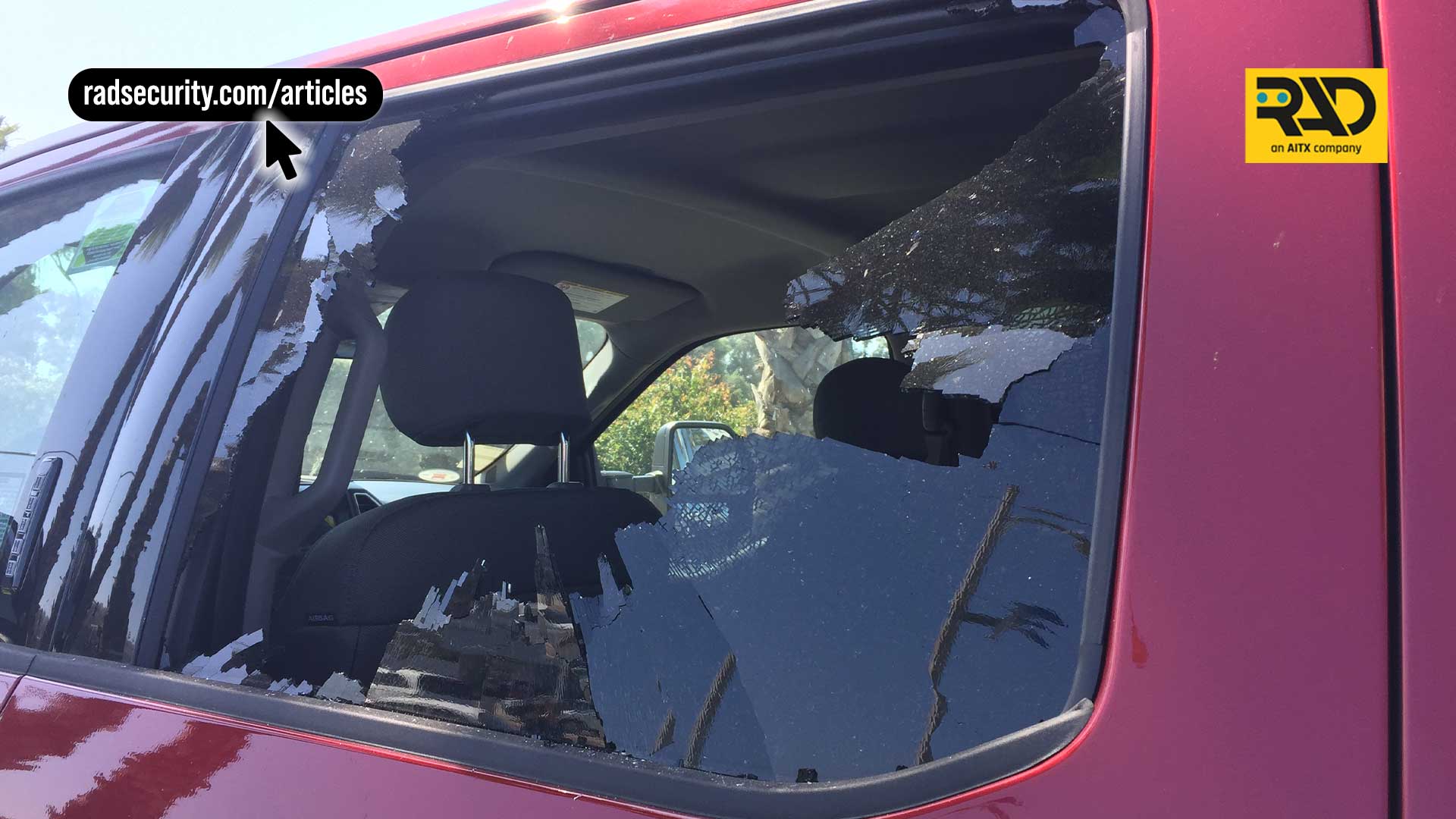
Few environments expose the limits of passive surveillance more clearly than an auto dealership. Millions of dollars in vehicles sit outside, legitimate after-hours activity is common, and a developing threat can look ordinary until the loss is already underway. The real security challenge isn't detection alone. It's verifying intent, initiating the right response, and documenting what happened before the opportunity to intervene is gone.
Why Dealership Properties Are Difficult to Secure
Dealerships combine open frontage, multiple buildings, service bays, customer parking, storage rows, and sometimes off-site inventory lots within one operating footprint. There's rarely a single perimeter to harden, and the inventory drives itself away.
The property is lightly staffed after hours, when transporters, cleaners, vendors, tow operators, and late-working employees may still be present. The challenge isn't simply detecting someone on the lot after midnight. It's determining whether that person should be there.
Even as national vehicle theft trends improve, dealerships remain concentrated, high-value targets. A single coordinated incident can create a severe financial and operational loss.
Traditional alarm infrastructure can also work against the dealership. Motion caused by headlights, weather, animals, and normal after-hours activity creates nuisance alerts that erode confidence in the system. In some jurisdictions, property alarms must be verified before officers are dispatched, increasing the importance of knowing what's happening before requesting a response.
The Financial and Operational Consequences
A stolen or damaged vehicle costs a dealership more than the value of the unit.
The loss may include front-end gross on a sold or allocated vehicle, floorplan carrying costs while a claim is resolved, delivery delays, deductibles, uninsured expenses, and additional scrutiny from insurers or lenders.
Then there's the cost nobody invoices: management time. After an incident, someone has to locate and export video, speak with police, document the loss, manage the insurance claim, communicate with the floorplan lender, and explain delays to affected customers.
When a customer's vehicle is involved, reputational exposure compounds the financial loss.
Risks Across the Dealership
Dealership losses don't come from one direction. Each area of the property carries a different risk profile and requires a different security response.
Front-Line and Display Inventory
The most valuable units often occupy the dealership's most visible and accessible ground. Organized crews may use cloned key fobs, breach key-storage systems, force service doors, or exploit gaps in after-hours access procedures to remove multiple vehicles during a coordinated incident.
Back Lots and Overflow Storage
Storage rows and off-site lots may hold substantial inventory with less lighting, fewer cameras, and limited staff visibility. Catalytic converters, wheels, tailgates, batteries, and other components can be removed quickly, particularly when multiple similar vehicles are parked together.
Customer Vehicles in Dealership Custody
Every customer vehicle in the service department is someone else's property under the dealership's care. Overnight service vehicles, early-bird drop-offs, body-shop inventory, and tow-ins arriving outside normal business hours create custody exposure that doesn't exist on the sales floor.
Garagekeepers liability follows those vehicles throughout the service process.
Parts, Tools, and Technician Areas
Parts rooms, tire storage, batteries, diagnostic equipment, and technicians' personal tools can represent hundreds of thousands of dollars in concentrated value. These areas experience heavy authorized traffic during the day but depend on disciplined access control after hours.
Gates, Key Drops, and After-Hours Access
Transporters, vendors, cleaners, tow operators, and employees may enter the property when staffing is limited. Key drops and key custody remain recurring vulnerabilities.
A gate opening for an authorized carrier at 11 p.m. can appear identical to a gate being opened for someone who shouldn't be there. Detection without context does little to resolve that distinction.
Customer and Employee Liability Areas
Showrooms, service drives, customer parking, and vehicle-delivery areas generate incidents unrelated to theft. These can include falls, vehicle-pedestrian near misses, workplace disputes, and allegations that a vehicle was damaged while in the dealership's possession.
In these situations, the security system's assignment is different. It must preserve an accurate, usable record of what happened.
Fixed Operations Expands the Security Requirement
The service department is where dealership property, customer property, employee activity, and public access overlap.
A fixed operations director is managing three security assignments at once:
- Protect customer vehicles and dealership assets.
- Distinguish authorized movement from unauthorized access.
- Preserve a defensible record of vehicle condition, custody, and activity.
That third assignment receives less attention than it should.
Clear video can help establish when a vehicle arrived, where it moved, who interacted with it, and what occurred while it was in dealership custody. It won't capture every angle or identify every pre-existing condition, but it allows disputed claims to be evaluated using evidence rather than recollection alone.
Why Recording Alone Doesn't Solve the Problem
Most dealership cameras operate as recording systems. Video is stored in a video management system and reviewed after theft, damage, or a customer claim has already occurred.
The cameras may have captured the event, but they didn't change its outcome.
The dealerships that use remote video monitoring still face another limitation: manual response. An operator may be responsible for dozens or hundreds of feeds, reviewing alerts sequentially and deciding what requires action while the event continues to unfold.
"Dealerships put millions of dollars of inventory outside every night and protect it with cameras nobody is watching. SARA Agentic AI changes that. Cameras get monitored, events get verified, and response starts in seconds instead of after the loss."
Steve Reinharz, CEO and CTO, Robotic Assistance Devices
Nobody installs cameras intending for them to go unwatched. RAD closes the distance between what dealers expected cameras to accomplish and what passive surveillance delivers on its own.
Layered Security Across the Property
A layered strategy matches each area of the dealership with the coverage it requires, then connects those systems through a common response layer.
Edge Deterrence Where Inventory Is Exposed
ROSA, RAD's Edge AI security device, provides real-time surveillance of exposed display rows, service entrances, key areas, and other high-risk zones.
When ROSA detects after-hours activity that meets the dealership's configured rules, it can trigger immediate audio and visual deterrence at the point of the event. With SARA Agentic AI active, the event can also be verified, addressed contextually, escalated, and documented in real time.
The goal is to interrupt the activity while it's still trespassing or loitering, before it becomes theft, vandalism, or a claim.
Flexible Coverage for Back Lots and Storage
RIO brings AI detection and edge deterrence to back lots, overflow storage, and off-site inventory without requiring permanent power or network infrastructure.
Solar power and cellular connectivity allow RIO to be deployed where fixed camera installation may be impractical. It can also be repositioned as inventory levels, lot configurations, or dealership priorities change.
One Response Layer Across Configured Cameras
SARA Agentic AI provides security incident response orchestration across configured cameras, including compatible cameras already connected to the dealership's VMS.
SARA can monitor events in parallel, verify activity in real time, execute dealership response protocols, communicate with stakeholders, and escalate verified incidents for intervention.
That context matters in a dealership environment. A scheduled transporter, an employee retrieving a vehicle, and an unknown person testing door handles may all appear as after-hours movement. The response should not be the same.
For incidents detected and handled through SARA, the dealership receives a time-stamped record of detection, verification, response, communications, and resolution. Existing video can also support separate claims investigations, depending on camera placement, retention, and system capabilities.
What Dealership Leaders Should Require
Autonomous security doesn't replace disciplined key control, physical barriers, access policies, lighting, inventory procedures, or employee accountability.
It closes the response gap around those controls by identifying suspicious activity and initiating action while an event is still developing.
Any dealership security strategy worth funding should provide:
- Deterrence at the point of the event through immediate audio and visual response.
- Parallel monitoring across configured cameras without a per-feed human bottleneck.
- Verification that distinguishes authorized after-hours activity from a developing threat.
- Escalation aligned with dealership procedures and local response requirements.
- Documentation that supports incident response, custody questions, insurance claims, and investigations.
A documented loss-control program built around these capabilities may also strengthen discussions with insurers and floorplan lenders, although outcomes will depend on the dealership's history, carrier, location, and market conditions.
From Recording to Response
Dealers never wanted recordings for their own sake. They wanted the loss not to happen, and when something did happen, they wanted proof.
Autonomous security addresses both requirements. It provides verified detection, deterrence, and escalation while an event is still developing, then preserves a defensible record of how the incident was handled.
That's the shift from cameras that document dealership losses to a security system designed to help prevent and resolve them.
See how autonomous security comes together across the property with RAD's auto dealership security solutions.