

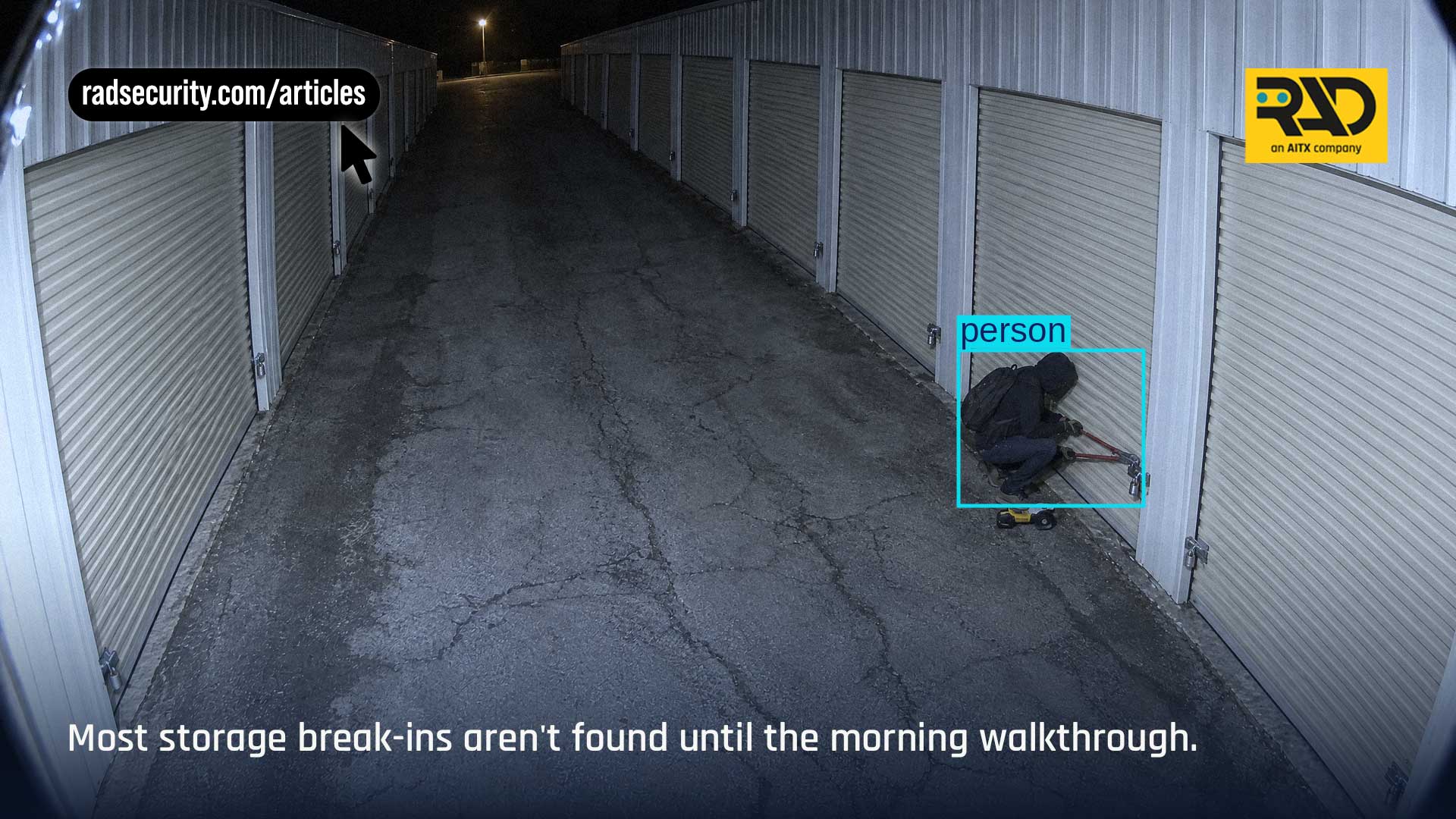
Why Storage Facilities Draw Repeat Burglaries
A self storage property puts hundreds of locked units in rows, out of view from the street. Many sites allow 24-hour or extended gate access, and after the office closes there's usually nobody on site. A thief can work one door after another without being seen.
That exposure shows up in the news all the time. In May 2025, more than 30 units were burglarized overnight at a Nashville facility. The manager left around closing time and didn't find the damage until the next morning, about 15 hours later. In August 2024, roughly 60 units were hit overnight at a Spring Valley, New York facility, and victims said some cameras had been spray-painted over. In early 2026, Santa Clara police linked 35 unit burglaries over three days to one suspect, part of about 75 across several cities.
Modern Storage Media has reported on the same pattern at the local level. One Colorado Springs facility logged about 30 police calls in three months. Most of the Nashville-area facilities it checked had theft or burglary calls on record.
How Storage Unit Break-Ins Happen
Storage burglars go after predictable gaps in how a facility operates.
Valid Codes and Rented Units
The most common way in is a legitimate one. Thieves rent a unit, get a working gate code, and come and go like any other tenant. In a Minnesota case charged in 2026, a suspect used his own code at one facility. Gate logs showed frequent after-hours entries and exits over about two weeks while he broke into neighboring units. Prosecutors tied him to more than $286,000 in losses across two facilities.
Cutting Through Walls, Doors, and Ceilings
Unit walls are usually corrugated sheet metal, and a battery-powered handheld saw cuts through it fast. In 2025, San Antonio police investigated two cases where burglars cut through the walls between units, including one where suspects rented a unit and cut into their neighbors' space. Other crews cut locks, pry up the bottom of roll-up doors, or climb through the ceiling.
Vehicle, RV, and Boat Storage
Outdoor parking areas add high-value targets with little cover. Catalytic converters, trailers, batteries, and parts are all exposed. In early 2025, an RV storage lot in City of Industry, California was taken over by dozens of squatters who damaged more than 50 campers. The lot's own security staff stopped trying to retrieve units because it wasn't safe.
Loitering and People Living in Units
Some problems don't start as theft. People loiter in the rows after hours, sleep in units, or use the property for drug activity. Left alone, it drives off tenants and puts staff at risk.
Lean Staffing Changes the Security Math
The industry is moving toward fewer staff hours per facility. On its third-quarter 2025 earnings call, Public Storage said it had cut labor hours by more than 30% through AI-enabled staffing and digital customer service. Its CEO added that "the days of needing a property manager on-site all day, every day are behind us." A 2023 SpareBox survey of operators found that two-thirds already use some form of remote management.
That shift is happening while margins tighten. SpareFoot put national average occupancy at 77% at the end of 2025, and street rates for a standard 10x10 unit were slightly down year over year in early 2026. Few operators can justify a guard post at every facility. By Bureau of Labor Statistics median wages, covering one post around the clock costs roughly $160,000 a year before contractor markup.
Why Cameras and Gate Logs Don't Stop the Loss
Most storage facilities already have cameras, keypads, and access logs. In nearly every case above, those systems helped identify suspects after the loss was complete.
Recorded video depends on someone watching it at the right moment, and nobody is watching overnight. Gate logs show a pattern of late-night visits only if someone checks them. Per-unit door alarms help, but they're expensive to install at scale and generate nuisance alerts. Unverified alarms also go to the back of the line for police at many outlying sites, because officers have learned that most turn out to be false.
Liability is on the line too. A lawsuit filed in Colorado in 2026 against a large operator seeks more than $1 million after a tenant's unit was emptied. It alleges the thieves used valid codes and that required lock checks weren't done. Claims like that put the focus on what the security program did while the theft was underway.
What Effective Self Storage Security Looks Like
Effective protection spots suspicious activity in the rows, challenges it right away, and gets it to a person when that's warranted, all without adding staff.
Edge Deterrence Over the Unit Rows
ROSA, RAD's Edge AI security device, mounts on a wall or pole over unit rows, gates, and exterior doors. When AI detection spots someone in a configured zone during configured hours, ROSA triggers pre-approved audio talk-downs, LED messages, and lights at that spot. Someone testing locks in a closed row finds out right away that they've been seen.
Coverage Where Power Isn't Available
RIO brings the same detection and deterrence to RV and boat storage lots, back fence lines, and expansion parcels. It runs on solar power and cellular connectivity, so there's no need to trench power or network.
Response Without an Operator Queue
SARA Agentic AI handles incident response orchestration across configured RAD devices and compatible existing cameras. When an event is detected, SARA verifies what's happening, carries out the facility's response plan, talks to the person on the property, notifies the right contacts, and escalates verified incidents. Owners get a time-stamped record of each incident SARA handles, from detection through resolution.
"Too many break-ins are recorded at night and discovered in the morning. SARA Agentic AI acts while there’s still time to intervene, keeps working the event until a responder takes over, then files an after-incident report.”
Steve Reinharz
Founder and CEO, Robotic Assistance Devices
This setup fits the way the industry is going. Operators can keep reducing on-site hours and still have perimeter intrusion detection, loitering deterrence, and vehicle monitoring running after hours.
What Operators Should Require
Locks, lighting, fencing, gate policies, and lock checks still matter. Autonomous security covers the hours when those controls run with nobody around. Any self storage security program worth funding should deliver:
- AI detection in the unit rows, at the gates, and in vehicle storage during configured after-hours windows.
- Audio and visual deterrence at the spot where the event is happening.
- Verification that separates a tenant loading at night from someone working through a row of locks.
- Escalation that follows the facility's procedures and local police requirements.
- Incident records that support tenant communication, insurance claims, and investigations.
A facility with those capabilities stops finding out about break-ins during the morning walkthrough. Tenants and insurers see a documented response, and managers spend their hours renting units instead of pulling footage.