
Quick Take
This article walks through a sequence. First, figure out what cameras you already have and whether the streams are usable. That's where SCANNA fits. It helps identify and connect third-party cameras. Then layer analytics where the camera views support the requirement. And finally, connect those detections into a response workflow through SARA Agentic AI.
In plain terms, use what you have, add intelligence where it counts, and make sure detections lead to real action. This is the budget-friendly path that security directors keep asking about. They've sunk capital into cameras already. Modernize the operation first, not the hardware. Keep the cameras that still give you a usable view. Upgrade the detection and response layers. Replace only what's really necessary. That lets a team reduce low-value motion noise, focus on real events, move faster, and phase investment versus rip and replace.
Start With the Cameras You Have
Most security camera systems grew over time.
Depending on the size of the organization, that can leave a security team managing hundreds or thousands of cameras spread across different sites, NVRs, and generations of equipment.
A lot of those cameras still provide perfectly usable video.
That's important because the move to AI analytics can start with that installed base. If the camera provides a usable IP video stream and has the right view for the job, there may already be enough infrastructure in place to begin improving detection.
Before deciding what to replace, it makes sense to find out what's still viable for AI analytics.
Find What's Connected
Anyone who's inherited a large camera system knows the inventory isn't always as clean as the network diagram suggests.
Cameras get added. Recorders get changed. Contractors come and go. IP addresses move. Some devices are documented well and others are discovered when somebody needs footage from them.
SCANNA helps with this part of the process by discovering third-party IP cameras and NVR channels and bringing those available video streams into view. For a large deployment, that gives the security team a much clearer picture of the camera infrastructure before analytics are added.
From there, you can begin sorting cameras by what they're protecting and what you'd like them to detect. Once those jobs are defined, it becomes much easier to decide where AI analytics can add value.
Move Past Basic Motion
Motion detection has been part of video surveillance for a long time, and security operators know what comes with it.
The system sees movement. An event gets generated. Then somebody has to determine what caused it.
That movement might be a real event, or it could be shadows, headlights, weather, vegetation, or an animal moving through the scene.
AI analytics can perform more of that classification before an event reaches the operator.
Now the camera stream can be analyzed for people, vehicles, loitering, perimeter activity, firearms, PPE compliance, and other defined conditions. Zones and schedules can narrow those detections further based on how the property operates.
That changes what comes into the security operation.
A security team that's been receiving motion alerts all night can begin working with events that carry more information about what happened and why the system flagged it.
For the operator, that's a meaningful difference. Less time spent opening video to find out what caused basic motion, and more attention toward events that match the site's security requirements.
The Best Views
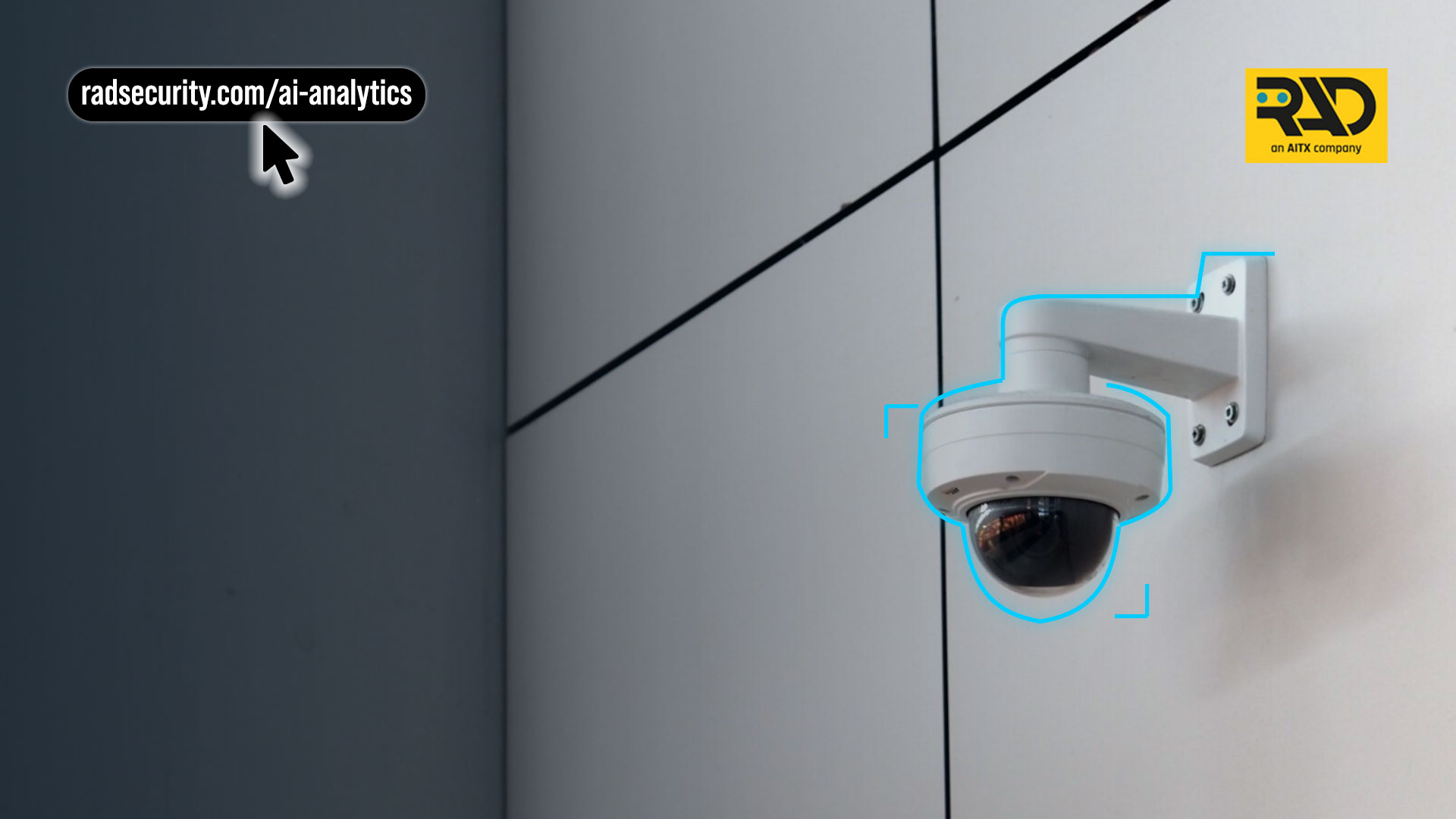
Some cameras may already have exactly the view needed. Those are strong candidates for analytics. Others may need to be repositioned. A smaller group may need to be replaced because the existing hardware can't provide the image required for the application.
That gives security teams a far more controlled way to spend capital. You're making upgrade decisions against a defined security requirement instead of putting every camera on the replacement schedule.
What Happens Next
Once a camera starts producing better detections, the next question is operational.
What happens when it detects something?
Consider an existing camera covering the rear of a facility. AI analytics identifies a person entering the area after hours. The event is more useful than a generic motion alert because the system has already classified a person in a defined area at a defined time.
The response still has to happen.
Most IP cameras can feed a modern analytics layer, so we're giving customers a way to modernize the operation around what they already own, with the capability to respond to verified alerts.
Steve Reinharz, CEO and CTO, Robotic Assistance Devices
Someone may need to verify the activity. The person may need to receive a voice warning. A supervisor or property contact may need to be notified. The event may need to escalate if the person remains in the area. Depending on the site's procedures, law enforcement or on-site security may eventually need to become involved.
This is where SARA Agentic AI extends the value of the camera beyond detection.
SARA can take a qualifying event and begin carrying out the response workflow defined for that situation. That can include verification, communication, stakeholder notification, escalation, and incident documentation.
For a security operation managing a large number of cameras, this means better detection can now feed a more consistent response process.
Scale Implementation
Start with the cameras where the security team already knows there's work to improve.
Look at the camera. Confirm the view. Define the activity you want to identify. Apply the appropriate analytics. Then determine what should happen when the system detects it. That creates a measurable deployment instead of a technology experiment.
You can look at how many motion events operators handled before the change, how many meaningful AI detections are being generated, how quickly events are verified, and how consistently the response procedure is being followed.
Then expand from there.
Bottom Line
Camera systems represent a major investment, and most organizations will continue operating a mix of existing and newer equipment for years.
AI analytics gives security teams another way to approach that lifecycle.
Existing cameras with useful views can continue serving as the eyes of the system. Analytics can improve what those cameras identify. SARA Agentic AI can help carry those detections into a response workflow. Hardware upgrades can be focused on the locations where the existing camera can't meet the requirement.
That creates a much more manageable path from traditional video surveillance toward autonomous security.
You don't have to solve the entire camera estate at once. Pick the areas where operators are spending time today, add analytics to the cameras that can support them, and see what changes in the operation.