
The next security problem at a correctional facility may begin outside the fence. A vehicle stops along an exterior approach. Someone lingers near a service entrance. Activity develops beside a support building while officers are handling demands inside.
Each situation requires attention. Getting that attention can mean diverting an officer, interrupting another assignment, or waiting for the next patrol to pass.
For prisons, jails and holding centers, that competition for attention deserves a different answer. RAD helps extend observation and response across exterior grounds, giving officers more information and more reach while they retain control of what happens next.
Officer Time Is a Security Resource
The staffing pressure is documented. In its 2025 assessment of the federal prison system, the U.S. Government Accountability Office reported that the Bureau of Prisons estimated a shortage of more than 9,500 correctional officers. Overtime had risen 43 percent since 2021, reaching almost nine million hours in 2024.
Those figures describe federal operations. Every facility must assess its own staffing demands, but the operational question travels well: which assignments require an officer's physical presence, and which could be supported through autonomous patrol and remote observation?
An officer's training is valuable during an emergency, a difficult interaction, or a decision involving custody and care. Routine exterior observation also matters. RAD's approach to correctional facility security helps administrators examine how technology can carry more of that observation workload.
Give Routine Patrol a Different Assignment
Consider a perimeter road that an officer repeatedly drives to observe fence lines, restricted approaches and adjacent grounds. The assignment consumes time, fuel and vehicle maintenance resources, even when nothing unusual occurs.
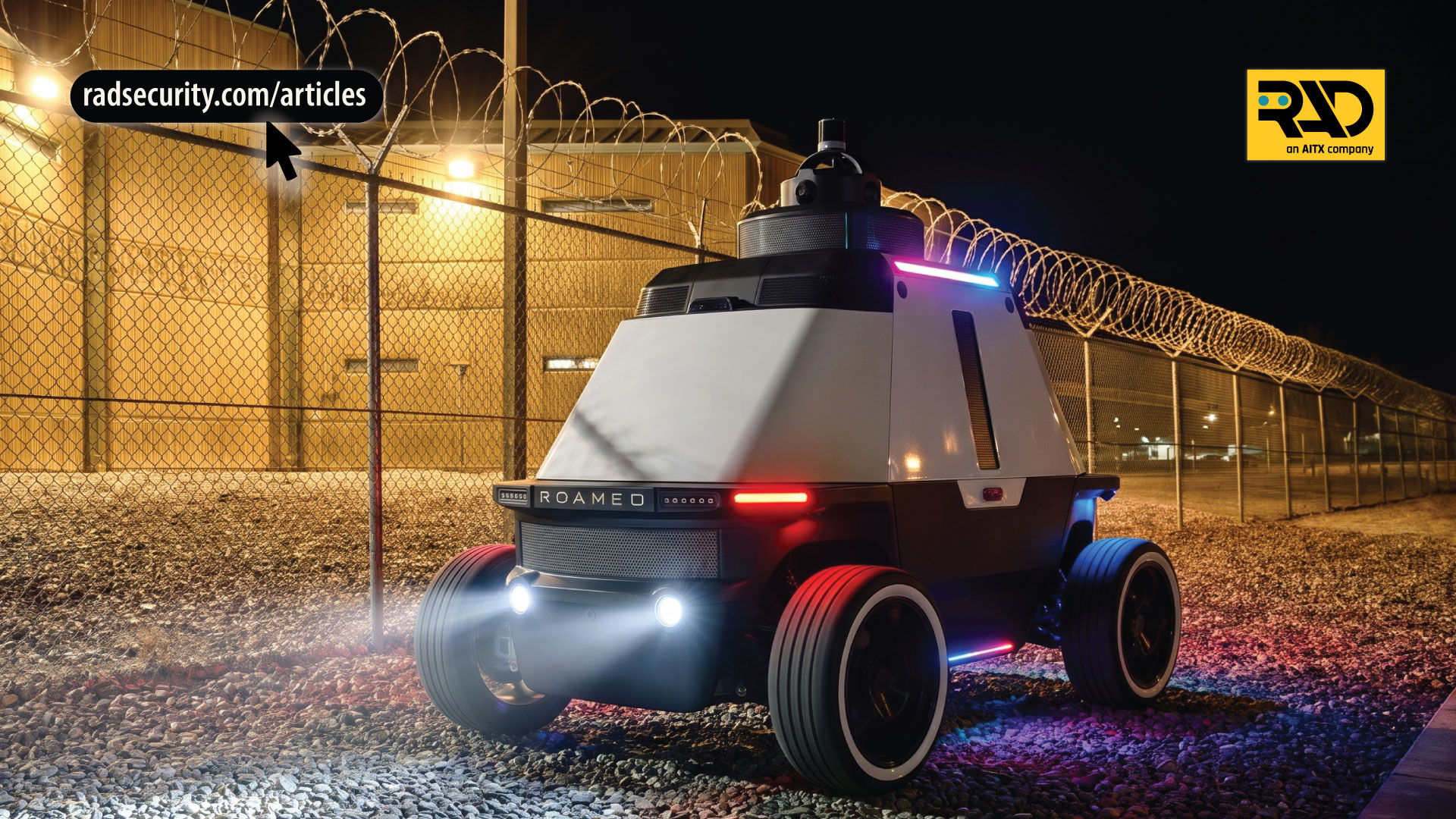
ROAMEO brings autonomous mobile observation to suitable exterior routes. It follows mapped paths, detects people and vehicles, and supports verbal engagement and alerts. Officers gain another way to assess activity without physically traveling to every observed location.
The opportunity is to assign appropriate patrol duties to ROAMEO and direct trained personnel toward work requiring their judgment and presence. Any change should follow an assessment of terrain, visibility, communications and response procedures.
Savings should be evaluated against actual patrol hours and fleet expenses. A useful deployment earns its place through measurable operational value.
Recognize the Approach Before the Incident
Contraband prevention depends partly on understanding activity around a facility. A person remaining near a restricted boundary or a vehicle stopping in an unusual location may give staff reason to investigate.
The National Institute of Justice's research on correctional contraband emphasizes multiple detection methods and the continuing role of staff in identifying and seizing prohibited items. That layered approach provides a practical place for exterior AI detection.
RAD can help officers see people and vehicles in designated areas and review activity that could be associated with a delivery attempt. Video and alerts provide context for a decision. Facility approved verbal warnings can address unwanted activity where appropriate.
This role is specific: observing suspicious approaches and supporting assessment. Identifying concealed drugs or the contents of a package requires other inspection methods. Clear expectations help facilities build effective layers of security.
Cover the Grounds Around the Mission
Exterior security extends beyond the fence. Staff parking areas, visitor approaches, loading locations and maintenance buildings compete for attention. A smaller jail or holding center may need coverage around one service entrance more urgently than a mobile patrol across extensive grounds.
The solution should follow the location. ROSA provides fixed AI detection, visual deterrence and two way audio where electrical power is available. RIO adds elevated coverage with solar and battery power where installing electrical service may be impractical.
Temporary needs deserve attention too. A construction project can change access routes and create equipment staging areas. RAIA's portable solar and battery powered design supports repositioning as exterior priorities change, with human and vehicle detection, remote viewing and SARA voice engagement.
Together, these options let administrators shape RAD coverage around their facility, selecting mobile, fixed or portable observation according to the work each area demands.
Fixed devices can watch selected approaches while ROAMEO moves through other areas. That combination helps a facility plan coverage around both recurring patrol needs and specific exterior locations.
Make the Alert Useful to the Officer
Detection has operational value when it helps someone act. An alert that leaves staff searching for context still consumes attention.
SARA, RAD's Speaking Autonomous Responsive Agent, helps connect detection with the next step. Depending on the device and service configuration, SARA can verify alerts, engage through voice, notify designated personnel and document incident activity.
Picture someone entering a restricted exterior area. A configured workflow can bring the event to staff attention, provide video for assessment and use verbal engagement according to facility procedures. Authorized personnel retain oversight and decide whether physical intervention is needed.
Begin With the Patrol Burden You Can Measure
Start with one exterior assignment that repeatedly draws officers away from other duties. Establish its current workload, identify suitable RAD coverage and measure the result. Review useful alerts, unnecessary notifications, response times and officer hours committed to the task.
That gives a pilot a concrete purpose and administrators evidence for the next decision.
Corrections officers carry responsibilities that demand experience, judgment and physical presence. RAD can help them oversee more ground while retaining control of response.
Show RAD where your team needs more coverage. Bring the patrol route, the troublesome entrance, or the exterior area that keeps pulling someone away.