Total cost and buying model
Can the buyer subscribe monthly, purchase outright, or both? What is included in the number: cameras, cellular data, AI, monitoring, speakers, support, and reporting?

Is LVT a Flock camera? No. LiveView Technologies (LVT) and Flock Safety are separate companies that compete for mobile security trailer business. Here's how LVT, Flock Safety, Verkada and RAD Security compare on price, monitoring, deterrence and what happens after a detection.
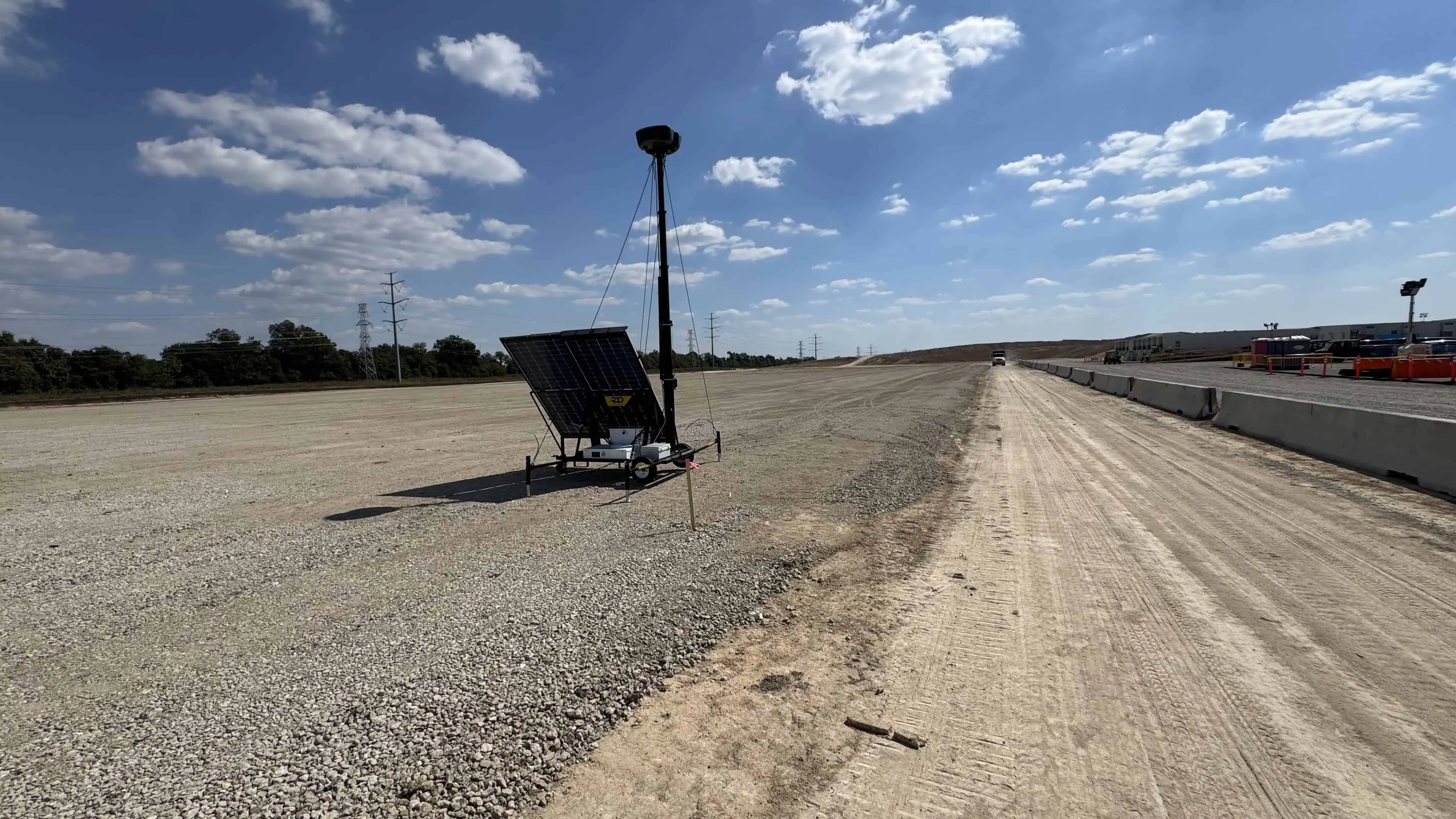
RIO provides the strongest value for organizations that need more than video capture. RIO (ROSA Independent Observatory) is an Edge AI mobile security trailer that combines AI-driven analytics, on-site lights and audio deterrence, edge AI continuity, RADSOC cloud management, and SARA Agentic AI to verify alarms, issue autonomous voice-downs, escalate per SOP, update responders, and create an incident record. LVT, Verkada, and Flock each offer credible mobile security trailer capabilities, but RIO is built to manage the active incident, not only record, alert, or support after-the-fact investigation.
The real buying criteria are operational: what happens at the trailer, how quickly deterrence begins, how verified alarms are handled, how the system performs in poor weather or connectivity outages, and how much work still depends on third-party monitoring.
Can the buyer subscribe monthly, purchase outright, or both? What is included in the number: cameras, cellular data, AI, monitoring, speakers, support, and reporting?
Does AI trigger physical deterrence and escalation on site, or does it only create an alert for a human operator who may respond too late?
If cellular drops, does detection and local deterrence continue at the edge? Which functions depend on the cloud or a live monitoring center?
How much solar generation and battery capacity are disclosed? Does the system require a generator in low-sun or northern climates?
What is the wind, temperature, ruggedness, and field-test story? Has the system been used in harsh outdoor sites, winter climates, and remote deployments?
Does the system produce an audit-ready report with video, timeline, communications, escalation actions, and outcome, or only clips and alerts?
Can users see video, events, battery and power status, connectivity, and device health from a cloud-managed operating layer?
Does the system provide an optimized 360-degree view, 180-degree panoramic coverage, or a custom camera configuration that must be designed around the site?
Can the platform distinguish people, vehicles, animals, and nuisance activity before escalation, or does it push every event to a person and create alert fatigue?
Can the system follow site-specific procedures, call the right stakeholders in parallel, and keep responders updated as the scene changes?
Are cameras, speakers, gateways, cellular data, AI, monitoring, and licenses included, or do buyers need to assemble a working trailer from separate line items?
Pick the company you're comparing. The table shows RAD Security's RIO head to head with LVT, Verkada MT81 or Flock Safety, one at a time.
| Buyer question | RAD Security (RIO) | LVT | Verkada MT81 | Flock Safety |
|---|---|---|---|---|
| Can I buy monthly, outright, or both? | RAD advantageRIO comes by subscription or outright purchase. MSRP is $2,695 a month for RIO Mini, $2,595 for RIO 180, and $3,595 for RIO 360 on a 12-month subscription. The subscription is all inclusive for the operating stack. Shipping and installation are billed separately.RAD source | LVT Essentials launched in August 2026 at $1,000 a month without AI analytics. LVT's FAQ puts other units at $1,500 to $4,000 depending on configuration. LVT source | Public configurator shows trailer MSRP at $58,000 or $65,000 before selected cameras, horn speaker, gateway, licenses, and data plan items. Example total shown: $70,808. Verkada source | Public page emphasizes a subscription model with one price covering hardware, software, and support, but does not publish a specific price. Flock source |
| What is included versus sold separately? | RAD advantageThe RIO subscription includes cellular connectivity, AI-driven analytics, SARA Agentic AI remote video monitoring, cloud storage, maintenance, support, deterrence hardware, incident reporting, and RADSOC cloud management for video, events, battery, power, connectivity, and device health. Deployment, shipping, and installation are billed separately. There's no retrieval charge unless you cancel early.RAD source | Public pages describe mobile units with cameras, lighting, loudspeaker, solar, cellular or satellite, analytics, platform access, and alert response options. Pricing inclusions are quote-based. LVT source | Trailer includes solar, battery, PoE switch, strobe, mounting, and remote power management. Cameras, horn speaker, and cellular gateway are sold separately. Verkada source | Buying guide says all devices, LTE data connectivity, data storage, hardware, software, upgrades, maintenance, and support are included in the subscription. Flock source |
| How complete is the AI analytics package? | RAD advantageRIO analytics cover people, boundary intrusion, loitering, vehicles, LPR/ALPR, tailgating, firearms, and PPE. RIO 180 and RIO 360 run standard ROSA on NVIDIA Jetson edge AI for the full set. RIO Mini runs ROSA Lite for core analytics.RAD source | LVT describes AI analytics for intruder identification, people and vehicle detection, line crossing, loitering, thermal analytics, and automated deterrents. LVT source | Verkada emphasizes AI video security, video alarms for trespassing and loitering, AI search across people and vehicles, smart alerts, face search, and LPR. Verkada source | Flock emphasizes people detection, loiter alerts, Guardian Mode, LPR integration, and AI-powered real-time alerts. Flock source |
| Is monitoring included, and what happens after an alert? | RAD advantageThe RIO subscription includes SARA Agentic AI for built-in remote video monitoring and incident response. SARA monitors video, verifies alarms, applies your policy, triggers deterrence, notifies stakeholders in parallel, updates responders, and produces time-stamped documentation.RAD SARA Agentic AI source | LVT describes AI analytics, event-based monitoring, Agentic AI in partner specifications, optional audio talk-down, live-agent pairing, alerts, and AI-driven deterrence. Reviewed pages do not describe SARA Agentic AI-style orchestration with autonomous stakeholder calls, responder updates, and full incident documentation. LVT source | Verkada describes video alarms where trained monitoring agents verify, talk down, notify teams, and dispatch police. Verkada source | Flock describes instant alerts, live footage, and optional third-party Alert Response Service to verify and respond to alerts. Flock source |
| False alarm filtering and verified alarms | RAD advantageSARA Agentic AI verifies each detected event against visual context, nearby camera views, behavior patterns, and your policy before it escalates. Credible incidents move forward and noise gets filtered out.RAD SARA Agentic AI source | LVT describes AI analytics and live remote agent escalation, with reporting and alert prioritization in its platform materials. LVT source | Verkada describes video alarms and trained monitoring agents verifying events before talk-down, notification, or dispatch. Verkada source | Flock describes AI alerts, people detection, loiter alerts, and optional third-party alert response services. Flock source |
| Does deterrence happen autonomously at the trailer? | RAD advantageRIO deters at the trailer on its own. It triggers LED and ribbon lights, two-way audio, and a 110 dB loudspeaker for SARA voice-downs as part of the response. RIO 180 and RIO 360 run standard ROSA with built-in audio deterrence.RAD RIO source | LVT describes automatic deterrents, high-powered floodlights, strobe lights, loudspeakers, automated spotlight tracking, AI-powered talk-downs, and live-agent talk-down. LVT source | MT81 includes a flashing blue LED strobe. BZ11 horn speaker supports talk-down when added, and monitoring agents may talk down during video alarms. Verkada source | Flock's buying guide describes alert-based talk-down, cadenced talk-down, live talk-down, two-way talk-down, flashing blue lights, and talk-down speakers. Flock source |
| What happens during the crucial response window? | RAD advantageRIO acts right away. It detects at the edge, verifies with SARA Agentic AI, delivers context-aware deterrence, escalates by your SOP, briefs responders, and documents the incident.RAD source | LVT can trigger automated deterrents and escalate to users or live agents if deterrence does not resolve the incident. LVT source | Verkada video alarms rely on trained monitoring agents for verification, talk-down, notification, and dispatch when required. Verkada source | Flock supports real-time alerts, live footage, talk-down modes, and optional alert response services depending on configuration. Flock source |
| Will AI still work if cellular goes down? | RAD advantageRIO runs AI analytics on-device. Detection and deterrence keep working during a cellular outage. RADSOC cloud access, escalation, and outside notifications need connectivity.RAD source | LVT publishes on-device processing and local SSD storage for some mobile unit capabilities, plus cloud VMS and connectivity options. LVT source | Verkada emphasizes cloud-managed Command access. Public MT81 page does not frame AI operation as network-independent edge response. Verkada source | Flock describes LTE-connected trailers and AI-powered real-time alerts. Public pages reviewed do not disclose edge AI operation during cellular outage. Flock source |
| Does the trailer need a generator? | RAD advantageRAD builds RIO end to end, so power management is tuned to the hardware. RIO Mini and RIO 180 use 1080W solar with a 5.12 kWh battery, and RIO 360 uses 2160W solar with a 10.24 kWh battery. RIO is designed for generator-free deployment across target sites.RAD source | LVT public materials describe 800W solar generation, 460 Ah battery capacity, and a smart generator when there is not enough sunlight. LVT source | MT81 uses a 1600W solar panel with either 6.6 kWh or 13.2 kWh battery. Configurator says uptime depends on sunlight, battery, power draw, orientation, and weather, and recommends AC shore power for deployments below 99 percent uptime. Verkada source | Flock describes solar panels and battery backups for 24/7 coverage but does not disclose battery capacity or solar wattage on reviewed pages. Flock source |
| Harsh weather and outdoor readiness | RAD advantageA RIO 360 in Vaughan, Ontario kept running through heavy snow, ice, and long stretches of cloud cover with no generator. Power-mode controls conserve energy without battery recharging in extended harsh weather.RAD weather source | LVT says its mobile units can withstand winds up to 60 mph and describes extreme-condition use with outriggers and smart generator support. LVT source | Verkada describes solar-powered deployment without power or network availability, but the reviewed MT81 page does not publish wind rating, weight, or extreme-weather test claims. Verkada source | Flock says trailers are weather resistant to rain, wind, dust, and extreme temperatures, but reviewed pages do not disclose exact ratings. Flock source |
| Field of view and site visibility | RIO covers the site out of the box. RIO 360 and RIO Mini give a 360-degree view. RIO 180 gives 180-degree panoramic coverage for gates, lanes, and corridors.RAD source | LVT provides configurable mobile surveillance units with cameras and elevated deployment. Buyers should confirm the final camera layout and field of view for each site plan. LVT source | MT81 supports configurable Verkada camera mounts on the trailer. Buyers choose the camera mix and should confirm whether the selected layout provides the required field of view. Verkada source | Flock describes mobile video coverage and LPR-led deployments. Buyers should confirm the camera configuration and field of view for the exact site plan. Flock source |
| LPR and ALPR support | RIO 180 and RIO 360 support LPR/ALPR when the camera view captures the plate. Validate placement, angle, lane geometry, distance, speed, lighting, and line of sight before you rely on any trailer-mounted LPR.RAD source | LVT added license plate recognition for private customers through a partnership with Insight LPR, announced in March 2026. Buyers should validate placement, angle, and lighting for any trailer-mounted LPR/ALPR use case. | Verkada emphasizes advanced LPR with bullet cameras, including partial and full plate search. Buyers should still validate trailer placement, camera angle, lighting, and capture geometry. Verkada source | Flock has strong public LPR positioning, LPR integration, vehicle details, known offender alerts, and evidence sharing. Buyers should still validate trailer-mounted plate capture against site geometry and line of sight. Flock source |
| Cloud-managed operations | RIO is cloud managed through RADSOC. You get visibility into video, events, battery and power, connectivity, and device health across your RAD devices.RAD source | LVT describes cloud video management, live feeds, recorded footage, remote camera control, alerts, reporting, health monitoring, and mobile access. LVT source | Verkada Command is the cloud-managed layer for video, AI search, alerts, investigations, trailer power management, camera configuration, and optional monitoring workflows. Verkada source | Flock describes dashboard access, real-time alerts, live footage, stored evidence, case sharing, and subscription support. Flock source |
| Incident reporting and audit trail | RAD advantageSARA Agentic AI produces a complete, time-stamped record of each incident, including video evidence, escalation actions, response timelines, communications, and outcomes.RAD source | LVT describes detailed event reports, basic reporting, advanced reporting, health monitoring, and event reports for intrusions. LVT source | Verkada Command supports video review, AI search, alerts, investigations, and integrations, but reviewed pages do not describe SARA Agentic AI-style incident lifecycle reports. Verkada source | Flock emphasizes high-definition evidence, timestamps, direction of travel, vehicle details, and evidence sharing, especially for investigations. Flock source |
| SOP-based stakeholder escalation | RAD advantageSARA Agentic AI runs your escalation workflow on its own. It notifies the right stakeholders in parallel, with role-specific messages set by policy.RAD SARA Agentic AI source | LVT describes user alerts, live-agent escalation, and possible police dispatch, but reviewed pages do not describe parallel stakeholder calling by an AI agent. LVT source | Verkada describes team notifications and police dispatch through monitoring workflows, but reviewed pages do not describe SARA Agentic AI-style parallel stakeholder conversations. Verkada source | Flock emphasizes alerts, evidence sharing, and law-enforcement collaboration, but reviewed pages do not describe AI-led parallel stakeholder conversations. Flock source |
| Best fit | RAD advantageBest for buyers who want AI analytics, active Agentic AI monitoring, autonomous deterrence, verified alarms, cloud management, SOP-based escalation, responder updates, and after-incident reporting in one trailer program. | Buyers that prioritize established mobile surveillance units, broad hardware configurations, and quote-based remote monitoring options. | Buyers already standardized on Verkada Command who want a cloud-managed trailer extension with configurable Verkada cameras, LPR, and monitoring. | Buyers who prioritize LPR-led investigations, evidence sharing, and law-enforcement collaboration alongside mobile video coverage. |
RAD doesn't force every site into one trailer. RIO Mini, RIO 180, and RIO 360 cover different site geometries, budgets, and analytics needs.
RIO provides the best value for buyers who want AI analytics, autonomous on-site deterrence, verified alarms, RADSOC cloud-managed visibility, SOP escalation, responder intelligence, and documentation in one package. A camera trailer may show what happened. RIO is built to help stop it while it is happening.
Short, direct answers to the questions security buyers ask most when they compare mobile security trailers.
Last updated: July 2026
This comparison is based on the best information publicly available at the time of publication. Competitor details come from each vendor's public pages, and RAD details reflect current RAD product guidance. Product specifications, pricing, and availability change over time, so confirm current details with each vendor before making a purchase decision.